
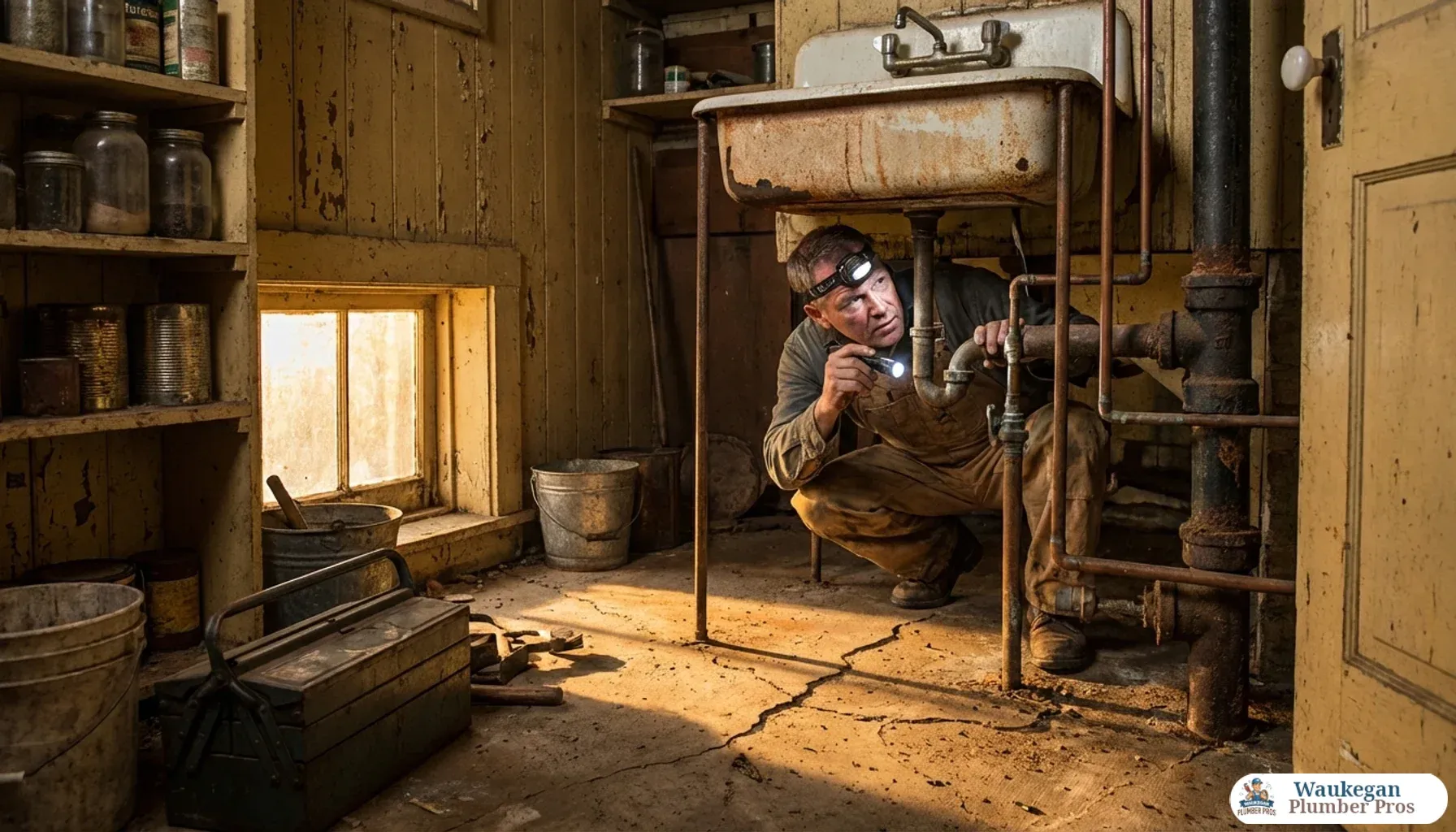
That charming 90-year-old bungalow in Waukegan might have incredible curb appeal, but hidden plumbing problems lurking behind its walls can derail a home sale faster than a cracked foundation — and cost your seller thousands in last-minute negotiations.
Waukegan and Lake County's older neighborhoods are filled with character-rich homes that buyers love — and aging plumbing systems that buyers' inspectors will scrutinize. From corroded galvanized pipes and lead service lines to deteriorating sewer connections invaded by decades of tree root growth, the plumbing challenges in these homes are as predictable as they are preventable. Yet too many listings hit the market without a single plumbing check, leaving sellers blindsided when inspection reports trigger aggressive renegotiations or outright deal collapses.
Realtors who get ahead of these issues don't just protect their sellers — they close faster, with fewer contingencies, and with their professional reputation intact.
This guide walks you through the essential plumbing checks every realtor should recommend before listing an older Waukegan home: what to inspect, what red flags to watch for, when to call a licensed local plumber, and how to turn plumbing transparency into a genuine competitive advantage.
Why Older Waukegan Homes Demand a Pre-Listing Plumbing Inspection
Walk through almost any established neighborhood in Waukegan — from the tree-lined streets near Clearview to the classic bungalows closer to downtown — and you'll find homes with genuine character and history. You'll also find plumbing systems that may not have been meaningfully updated since Eisenhower was president. Many homes in Waukegan's established neighborhoods are 50 to 90+ years old, and their pipes, sewer connections, and water supply lines often predate the materials and codes that modern buyers and inspectors expect to see.
That age gap matters enormously in a real estate transaction. Plumbing issues consistently rank among the top deal-killers in home sales. When a buyer's inspection report surfaces corroded galvanized pipes, a compromised sewer line, or a water heater well past its useful life, the fallout is predictable: aggressive price reduction requests, demands for seller credits, or — in the worst cases — a buyer who simply walks away. In a market where every negotiation point counts, those surprises are entirely avoidable.
A pre-listing plumbing inspection by a licensed Waukegan plumber gives sellers a critical advantage. Rather than reacting to a buyer's inspector findings under deadline pressure, sellers can assess problems on their own timeline, make strategic repair decisions, and disclose known conditions transparently — all of which builds buyer confidence and reduces friction during the inspection period.
Perhaps most importantly, savvy buyers in the Lake County and Chicagoland market are increasingly requesting sewer camera inspections as a standard contingency. Sellers who already know what's underground — and have documentation to prove it — enter those conversations from a position of strength rather than uncertainty.
Pipe Material Red Flags: Galvanized, Lead, and Polybutylene Pipes
The pipes hidden inside an older Waukegan home tell a story — and it's one that buyers, inspectors, and insurance companies are increasingly fluent in reading. Before a single showing is scheduled, realtors should ensure their sellers understand exactly what materials are running through their walls, because pipe composition is one of the most consequential factors in how a home is priced, insured, and ultimately sold.
Galvanized Steel Pipes
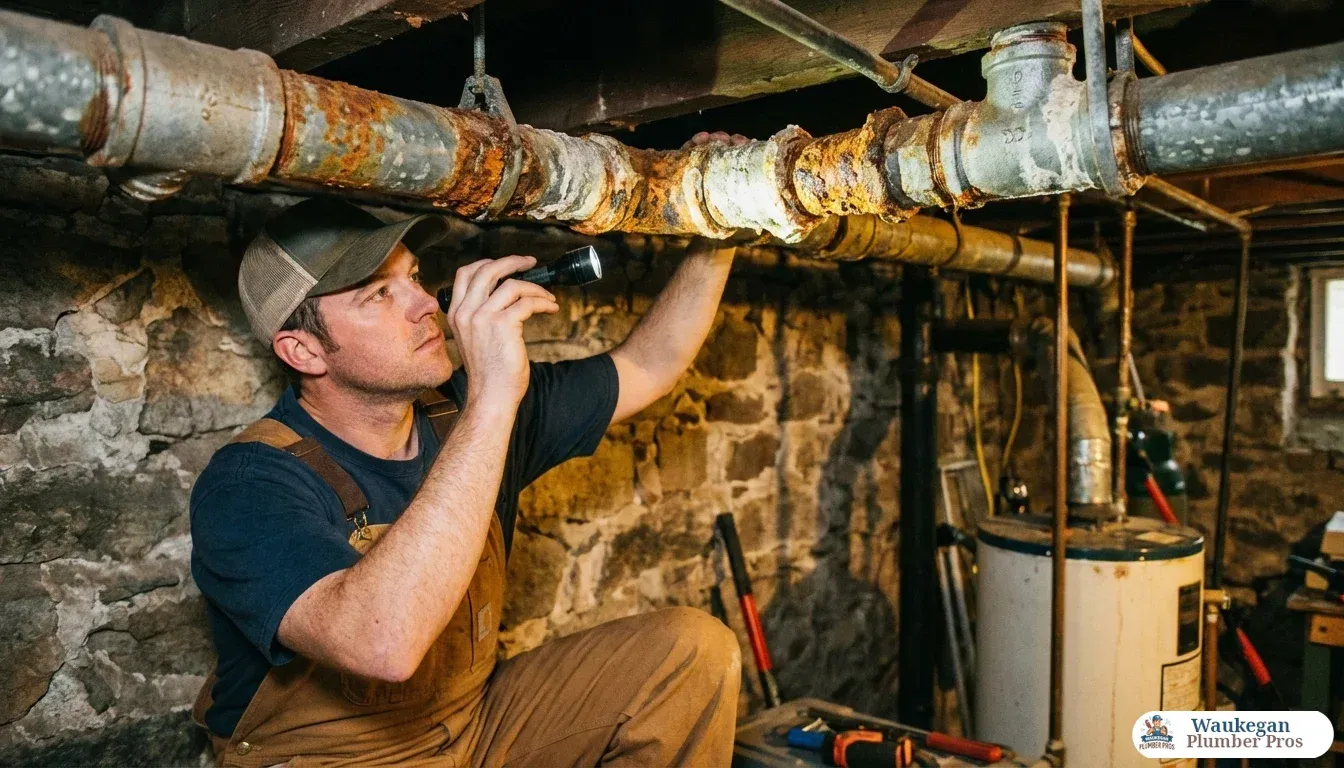
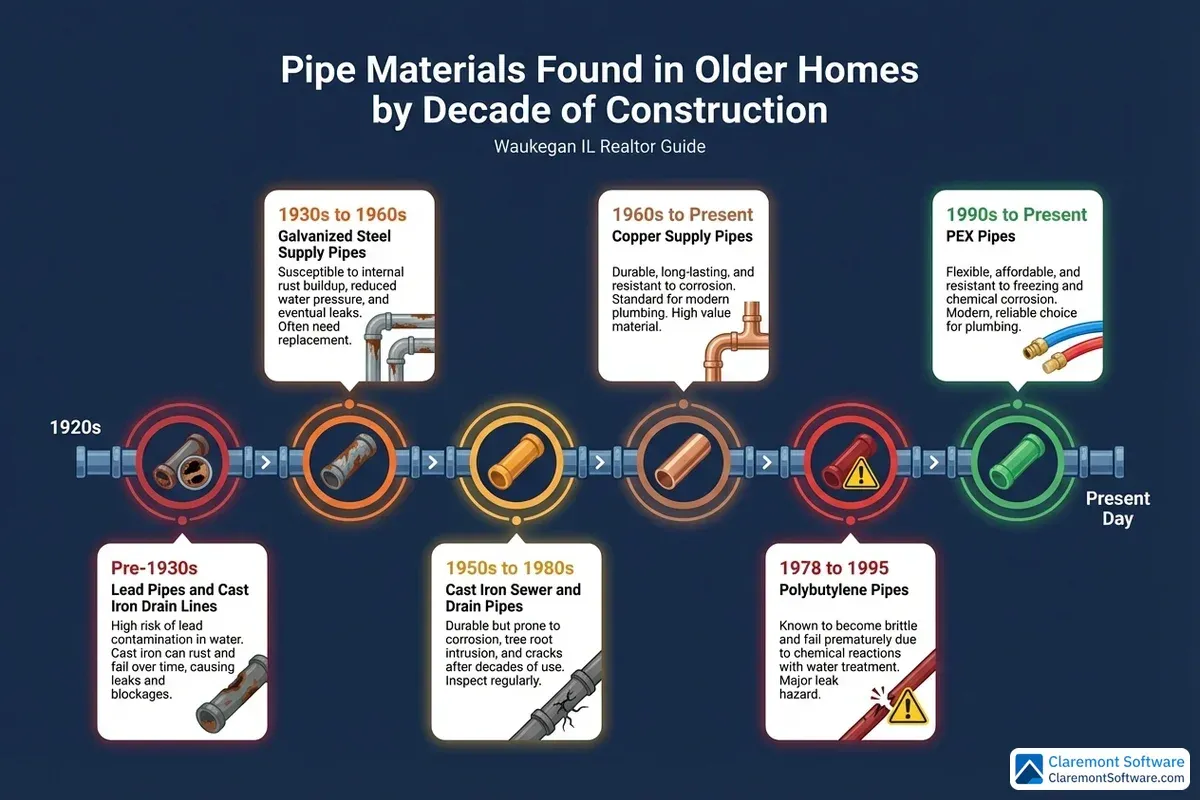
Galvanized steel was the standard supply pipe material in homes built before the 1960s, which means it's present in a significant portion of Waukegan's older housing stock. The problem is deceptively slow-moving: galvanized pipes corrode from the inside out, accumulating rust and mineral deposits over decades until the interior diameter narrows to a fraction of its original size. The symptoms sellers and realtors should watch for include:
- Chronically low water pressure, particularly on upper floors
- Discolored or rust-tinged water, especially after periods of low use
- Visible orange or white corrosion at pipe joints and connections
- Pinhole leaks developing at weakened sections of pipe
By the time these symptoms are obvious, the pipe is often near the end of its functional life. A buyer's inspector will flag galvanized supply lines immediately, and for good reason — replacement is not a matter of if, but when.
Lead Pipes and Lead Solder
Lead pipes and lead solder joints represent a more urgent concern than deterioration alone — they're a public health issue. Older homes in Lake County, including many in Waukegan, were built or plumbed during an era when lead was a standard material for service lines and solder connections. Lead can leach into drinking water with no visible sign, making it invisible to a casual walkthrough but impossible to ignore once identified.
Sellers should be aware that Waukegan has active municipal programs addressing lead service line replacement, and understanding where the city's responsibility ends and the homeowner's begins is important context for any pre-listing conversation. A licensed plumber can identify whether lead components are present in the home's interior plumbing, while the city can provide information about the service line running from the street.
Polybutylene Pipes
Homes built or replumbed between roughly 1978 and 1995 may contain polybutylene piping — a gray plastic material that was once marketed as a cost-effective alternative to copper. It didn't hold up. Polybutylene is prone to brittle fracturing, particularly when exposed to chlorine in municipal water supplies, and many home inspectors classify it as a material defect. More practically, some homeowners insurance carriers will refuse to write policies — or will charge significantly higher premiums — on homes with polybutylene supply lines still in place.
What Realtors Should Do
Before listing any older Waukegan home, advise your seller to have a licensed plumber physically identify all pipe materials throughout the home and provide a written assessment. This single step accomplishes several things at once: it eliminates guesswork, creates documentation for Illinois disclosure requirements, and gives sellers the information they need to make informed decisions about whether residential pipe replacement services, a full repipe, or a price adjustment is the right path forward. Copper and PEX are today's accepted standards — knowing the realistic cost to bring a home up to those standards puts your seller in control of the negotiation before the buyer's inspector ever sets foot inside.
Sewer Line Inspection: The #1 Pre-Listing Must-Do
Of all the pre-listing plumbing steps a seller can take, none delivers a higher return on peace of mind — and negotiating leverage — than a professional sewer camera inspection. Yet it remains one of the most commonly skipped items on a seller's preparation checklist, often because what's underground feels abstract until a buyer's inspector makes it very concrete, very expensive, and very urgent.
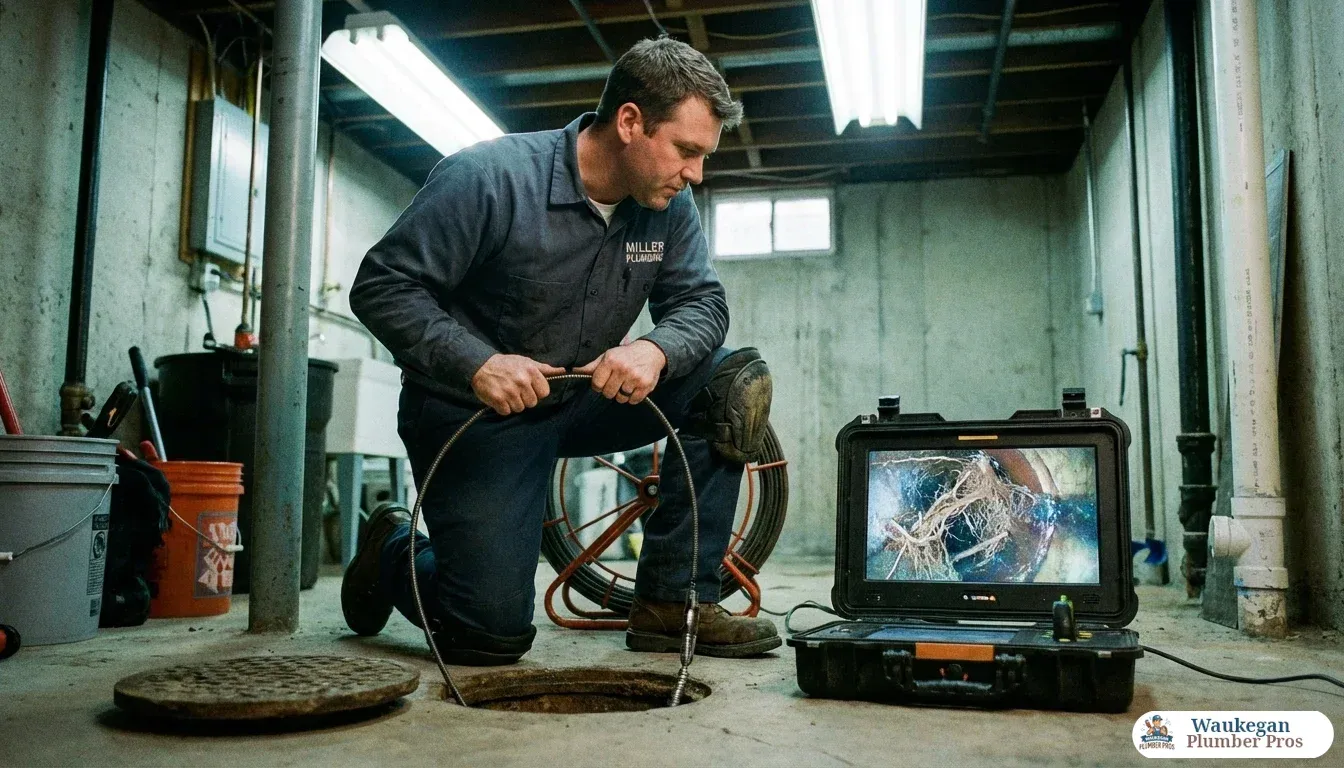
A sewer camera inspection involves feeding a flexible, waterproof camera through the home's main drain line to capture real-time video of the pipe's interior condition. What it reveals can range from reassuring to alarming: tree root intrusion, bellied or sagging pipe sections, offset joints, hairline cracks, and the gradual deterioration of clay or cast iron connections that are common in Waukegan's older housing stock. There's simply no other way to know the true condition of underground sewer lines without looking at them directly.
Tree root invasion deserves particular attention in Waukegan's established neighborhoods. Mature trees — the same ones that give these streets their character and shade — send roots searching for moisture, and aging clay sewer lines are a reliable source. Root intrusion doesn't announce itself with obvious symptoms until the blockage is severe. By then, a seller is no longer dealing with a maintenance issue; they're dealing with a negotiation crisis.
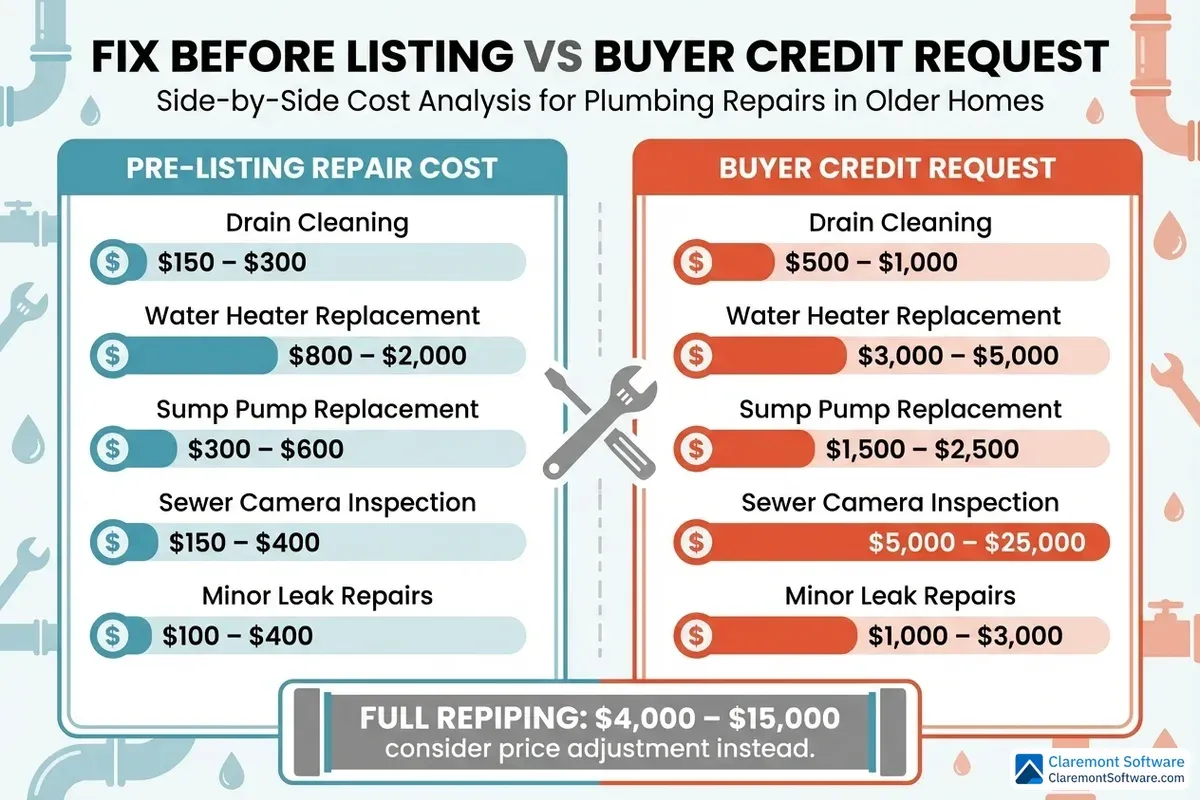
The financial math here is straightforward. A sewer scope inspection typically costs between $150 and $400 — a modest investment by any measure. Compare that to the $5,000 to $25,000 in post-inspection negotiation surprises that a compromised sewer line routinely generates, and the case for completing this step before listing becomes difficult to argue against.
When repairs are needed, sellers shouldn't assume the only option is costly excavation. Trenchless sewer lining — also called cured-in-place pipe (CIPP) — restores deteriorated lines from the inside without digging up the yard or driveway. For buyers already nervous about an older home's infrastructure, knowing that a non-invasive repair solution exists (and has potentially already been completed) can meaningfully shift their confidence level.
The most effective approach is to complete the sewer camera inspection before listing and include the report in the seller's disclosure packet. A clean report is a genuine selling asset. A report that documents a known issue — paired with a repair estimate or completed work receipt — demonstrates transparency and removes the uncertainty that drives buyers toward aggressive credits or exit clauses.
Water Heater Age and Condition Assessment
Water heaters occupy an interesting position in the pre-listing conversation: they're one of the most straightforward items to evaluate, yet they generate a disproportionate number of inspection objections and buyer credit requests. A home inspector will note the water heater's age on every report without exception — and in an older Waukegan home, there's a reasonable chance the unit has already outlived its useful life.
The standard lifespan for a conventional tank water heater is 8 to 12 years. That's it. A unit pushing 10 years or beyond will be flagged regardless of how well it appears to be functioning, because buyers and their agents understand that a failing water heater isn't a question of if — it's a question of timing. Beyond age alone, sellers and realtors should watch for these signs of imminent failure before listing:
- Rust or corrosion on the tank body or at connection points
- Pooling water or moisture at the base of the unit
- Inconsistent hot water delivery — running out faster than usual or fluctuating temperatures
- Popping, rumbling, or banging sounds during heating cycles, which indicate sediment buildup on the heating element
Advise sellers to locate the manufacturer's label on the unit and document the installation date, last service record, and whether the water heater meets current Illinois code requirements for proper venting and pressure relief valve installation.
The financial calculus here tends to favor proactive replacement. Installing a new conventional water heater typically runs $800 to $2,000 depending on tank size and installation complexity — a manageable pre-listing expense when you work with a local service offering water heater repair and installation. Leaving an aging unit in place, by contrast, routinely invites buyer credit requests in the $3,000 to $5,000 range, because buyers factor in both the replacement cost and the inconvenience of coordinating the work after closing.
For sellers open to a modest upgrade, a tankless water heater can be positioned as a genuine selling feature — offering on-demand hot water, lower energy consumption, and a lifespan nearly double that of a conventional tank. In a Lake County market where energy-conscious buyers are increasingly common, that's a conversation worth having.
Sump Pump and Ejector Pump Functionality Checks
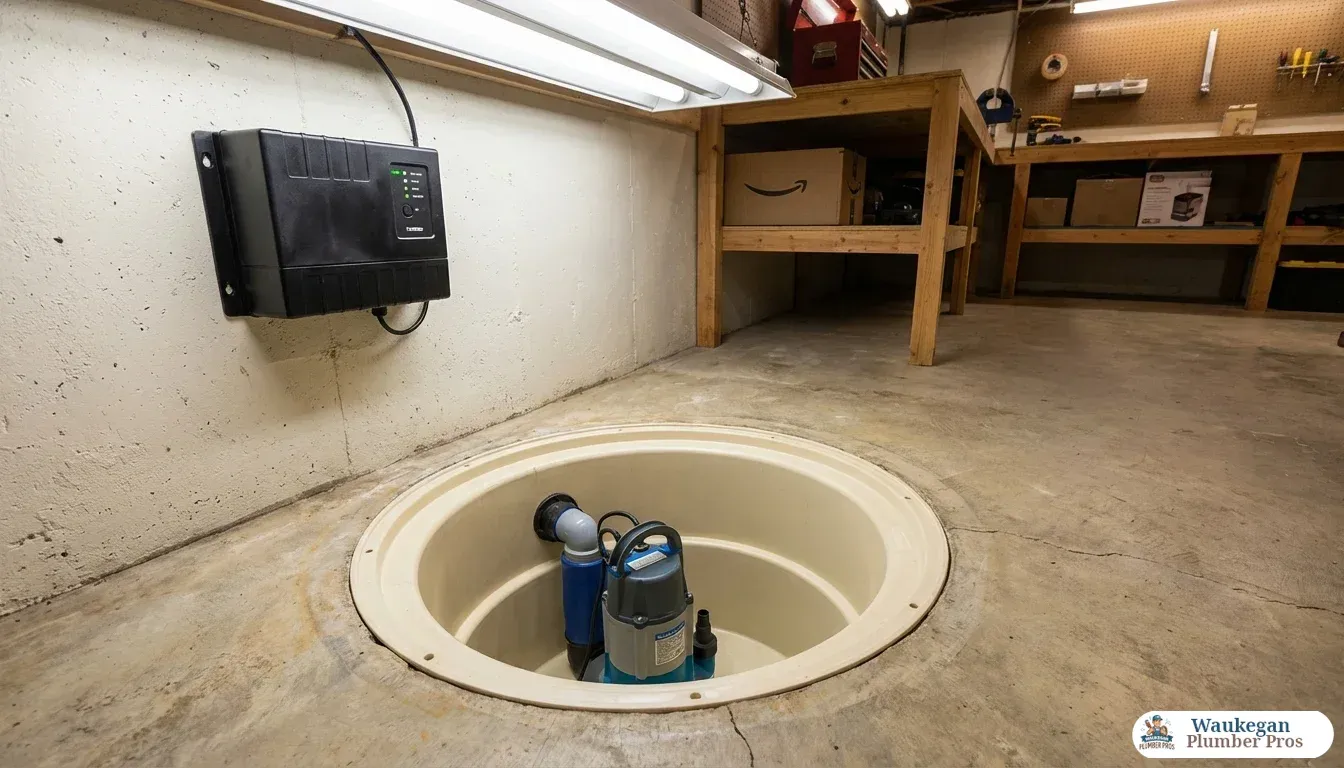
Waukegan's geography works against complacency when it comes to basement water management. The city's proximity to Lake Michigan and the elevated water table throughout Lake County mean that a sump pump isn't a nice-to-have feature in an older home — it's a frontline defense against the kind of basement flooding that can transform a promising listing into a liability overnight. A failed sump pump discovered during a buyer walkthrough or home inspection doesn't just create a repair negotiation; it raises fundamental questions about the home's water history that are difficult to answer reassuringly after the fact.
Before listing, sellers should have a local sump pump services provider verify the following:
- The pump activates properly when the float rises — manual testing by lifting the float switch is a basic but essential check
- The float switch moves freely without obstruction and triggers the pump at the correct water level
- The discharge line is clear, properly connected, and directed away from the foundation — a line that terminates too close to the home simply recirculates water back toward the pit
- A battery backup system is installed and functional — during heavy Chicagoland storms, power outages and peak sump pump demand often arrive simultaneously
Homes with basement bathrooms, laundry rooms, or utility sinks located below the main sewer line will also have an ejector pump — a system that grinds and pumps waste upward to the sewer line. These units require their own pre-listing attention. A plumber should test the ejector pump for proper operation, inspect the pit lid seal for integrity, and confirm there are no odor issues escaping into the basement. A compromised ejector pump seal is the kind of problem that announces itself immediately during a showing.
Home inspectors throughout the Chicagoland area scrutinize basement water management systems closely, and buyers have learned to do the same. A well-maintained sump pump with a functioning battery backup communicates something important beyond its mechanical purpose — it signals that the seller has been attentive to the home's vulnerabilities. Replacing an aging sump pump runs $300 to $600 installed; adding a battery backup system typically costs $200 to $400. For the buyer confidence those investments generate, few pre-listing expenditures offer better return.
Drain Cleaning and Water Pressure Testing Before Showings
Few things undermine buyer confidence during a walkthrough faster than a drain that gurgles, backs up, or empties at a glacial pace. It's a visceral signal — one that immediately raises questions about what else might be wrong beneath the surface. Professional drain cleaning and sewer rodding before listing eliminates this risk entirely, and given that drain cleaning services in the Waukegan area typically run $150 to $300, it's one of the most cost-effective pre-listing investments a seller can make.
Beyond the cosmetic impression, slow drains in an older home can indicate something more serious than a routine clog — partial blockages from years of buildup, deteriorating pipe interiors, or early-stage root intrusion that hasn't yet been caught by a sewer camera inspection. A licensed plumber can rod out drain lines, clear any accumulated debris, and flag anything that warrants closer investigation before a buyer's inspector does the same.
Water pressure testing deserves equal attention. Low water pressure throughout the home is a classic symptom of corroded galvanized supply pipes — the interior scaling that narrows the pipe's effective diameter over decades of use. It can also point to partially closed shutoff valves or issues with the municipal supply connection. On the opposite end, water pressure exceeding 80 PSI creates its own problems, stressing fixtures, accelerating wear on supply lines, and potentially voiding manufacturer warranties on appliances.
A licensed plumber can test pressure at multiple points simultaneously, identifying drops between fixtures that signal undersized or deteriorating supply lines rather than a simple valve adjustment.
Before listing, realtors should also recommend a straightforward stress test: run all faucets, flush every toilet, and operate the dishwasher and washing machine at the same time. If flow noticeably degrades under that combined demand, buyers will eventually discover the same thing — better to find it first.
Frozen Pipe Risks and Seasonal Listing Considerations
Waukegan's winters don't ease into cold — they arrive hard, and older homes feel every degree of it. Pipes running through exterior walls, uninsulated crawl spaces, and unheated utility areas in homes built decades before modern energy codes are genuinely vulnerable to freezing, and a burst pipe during the listing period isn't just a repair problem. It's a potential sale-ender that brings water damage, mold risk, and insurance complications into a transaction that was otherwise moving forward.
For fall and winter listings, realtors should confirm that sellers have addressed the basics before the first showing:
- Pipe insulation on any supply lines running through exterior walls, crawl spaces, or unheated garage areas
- Heat tape installation on pipes in particularly exposed locations where insulation alone may be insufficient
- Thermostat settings maintained at a minimum of 55°F — even during extended periods when the home is vacant between showings
That last point matters more than sellers sometimes realize. A home sitting empty during a cold snap with a thermostat set too low is a frozen pipe waiting to happen, and the resulting damage can set a listing back by weeks.
Homes that have been vacant or formally winterized require a licensed plumber's attention before going on the market. Re-pressurizing the system and methodically checking for leaks — including at joints and fittings that may have shifted during the freeze-thaw cycle — is not a task to skip in the interest of a faster listing timeline.
Spring and summer listings carry less immediate risk, but winter preparedness should still be documented. Buyers purchasing in warmer months will eventually face their first Waukegan winter in the home, and evidence that the seller managed cold-weather plumbing responsibly is a quiet but meaningful reassurance.
Illinois Disclosure Requirements for Known Plumbing Defects
Illinois law doesn't leave much room for ambiguity when it comes to seller disclosure. Under the Illinois Residential Real Property Disclosure Act, sellers are required to complete a Residential Real Property Disclosure Report before closing — a document that includes direct questions about known plumbing defects, sewer system problems, water intrusion history, and material deficiencies in the home's systems. For older Waukegan homes with aging infrastructure, this isn't a formality. It's a legal obligation with real consequences.
Failing to disclose known plumbing issues can expose sellers to rescission of the sale, post-closing lawsuits, and significant financial liability. In some cases, realtors who were aware of undisclosed defects have faced legal exposure as well. The operative word throughout is known — sellers aren't expected to be clairvoyant, but they are expected to disclose what they're aware of. This is precisely why a pre-listing plumbing inspection is so valuable from a legal standpoint: it creates a documented record of the home's condition at the time of listing.
Common plumbing items that trigger disclosure obligations include:
- Known lead pipes or lead solder connections
- Previous sewer backups or line failures
- Sump pump failures or basement water intrusion history
- Any history of frozen or burst pipes
- Water heater age and known deficiencies
Proactive disclosure — paired with repair receipts or licensed plumber estimates — actually works in the seller's favor. Buyers who receive transparent documentation upfront are far less likely to use inspection findings as leverage for aggressive renegotiation. Honesty, backed by paperwork, builds the kind of buyer confidence that keeps transactions on track.
Cost-Benefit Analysis: Fix Before Listing vs. Price Reduction
Not every plumbing issue discovered before listing demands an immediate repair. The smarter approach is prioritization — and realtors who help sellers think strategically about which fixes deliver real return on investment will close more deals with fewer headaches.
High-ROI repairs worth completing before listing tend to share a common trait: they're relatively affordable, but they eliminate the inspection objections that give buyers the most negotiating ammunition. Drain cleaning, sump pump servicing, minor leak repairs, and water heater replacement all fall into this category. These are the line items that show up on every inspection report, trigger immediate buyer concern, and cost far more to concede in negotiation credits than they do to simply fix upfront.
Major repairs require a different calculation. Full repiping, sewer line replacement, or significant drain system overhauls represent substantial investments that may or may not make sense depending on current Lake County market conditions, the home's price point, and comparable sales in the neighborhood. In these cases, a price adjustment or seller credit — backed by a written estimate from a licensed Waukegan plumber — is often the more practical path.
That written estimate matters more than sellers realize. When buyers discover a major plumbing issue during inspection without any documentation in hand, they frequently demand inflated credits based on worst-case assumptions. A professional estimate reframes the conversation around actual costs, not fear.
Ultimately, homes entering the Waukegan market with a clean pre-listing plumbing inspection report — or transparent documentation of known issues — consistently sell faster and with fewer contingencies than those where plumbing condition remains an open question.
How to Choose a Licensed Waukegan Plumber for Pre-Listing Inspections

Not all plumbers are equally equipped to handle the specific demands of a pre-listing inspection on an older home — and choosing the wrong one can leave sellers with an incomplete picture right before they go to market. Here's what realtors should advise their sellers to look for.
Verify the Illinois plumbing license first. Any plumber performing work or issuing an inspection report in Waukegan should hold a valid Illinois plumbing license. This isn't a technicality — it's legal protection for the seller and ensures all assessments and repairs meet current state and local code requirements. Ask for the license number before scheduling.
Prioritize experience with older homes. A plumber whose resume is built on new construction or emergency service calls may not recognize the nuances of a 70-year-old galvanized supply system or a clay tile sewer connection from the 1940s. Look for companies with demonstrated experience in pre-sale inspections and established Waukegan-area neighborhoods — ideally firms with decades of local history who understand the specific pipe materials, soil conditions, and municipal infrastructure common to Lake County homes.
Require a written inspection report. Verbal assessments carry zero weight in real estate negotiations. Any findings need to be documented in a written report that can be shared with buyers, their agents, and attorneys.
Confirm the company is licensed, bonded, and insured, and check reviews on platforms like Google or Yelp before granting property access.
Ask about sewer camera inspection services. Bundling a general plumbing inspection with a sewer scope saves time, reduces scheduling friction, and delivers a more complete picture of the home's condition in a single visit.
Conclusion
Older Waukegan homes carry real charm — and real plumbing risk. The gap between a smooth closing and a derailed deal often comes down to what a seller knew, when they knew it, and whether they addressed it proactively rather than reactively under the pressure of a buyer's inspection deadline.
Realtors who build a thorough pre-listing plumbing checklist into their standard seller preparation process — covering pipe materials, sewer line condition, water heater age, sump pump reliability, and drain performance — consistently deliver better outcomes for their clients. Fewer contingencies. Fewer last-minute credits. Fewer deals that fall apart over problems that were entirely fixable.
The math is straightforward: pre-listing plumbing maintenance almost always costs a fraction of what sellers surrender in buyer negotiation credits for the same issues discovered during inspection. Transparency, backed by documentation from a licensed local plumber, builds the buyer confidence that keeps transactions on track.
Before your next listing in an established Waukegan neighborhood, make the call. Partner with an experienced, licensed plumber who understands the unique challenges of older Lake County homes — and protect both your seller's equity and your professional reputation.
Need a plumber?
Frequently Asked Questions
How much does a pre-listing plumbing inspection cost in Waukegan, IL?
A standard pre-listing plumbing inspection in Waukegan typically costs between $150 and $400, depending on the scope of work and whether a sewer camera inspection is included. Bundling a general plumbing inspection with a sewer scope is often the most cost-effective approach. Drain cleaning services in the area generally run $150–$300. When you consider that undetected plumbing issues can result in $3,000–$25,000 in buyer negotiation credits or repair demands, the upfront cost of a pre-listing inspection is one of the smartest investments a seller can make before going to market.
What plumbing issues are most likely to kill a home sale?
The plumbing problems most likely to derail a home sale include deteriorating sewer lines (especially those damaged by tree root intrusion), galvanized or lead pipes, a failing or aged water heater, a non-functioning sump pump, and slow or backed-up drains. Sewer line damage is particularly deal-threatening because repairs can cost $5,000–$25,000. Buyers in the Waukegan and Lake County market increasingly request sewer camera inspections, so underground line issues rarely go undetected. Any of these problems discovered during a buyer's inspection can trigger aggressive price renegotiations or cause buyers to walk away entirely.
Are sellers in Illinois required to disclose known plumbing problems?
Yes. Illinois law requires home sellers to complete a Residential Real Property Disclosure Report, which includes questions about known plumbing defects, sewer problems, water intrusion, and material deficiencies such as lead pipes. Failing to disclose known plumbing issues can expose sellers — and potentially their realtors — to legal liability, rescission of the sale, or post-closing lawsuits. Completing a pre-listing plumbing inspection creates a documented record of the home's condition, allowing sellers to disclose issues transparently and in good faith, which actually builds buyer trust and reduces the risk of aggressive renegotiation.
How do I know if my older home has lead or galvanized pipes?
The most reliable way to identify pipe materials in an older home is to have a licensed plumber conduct a visual inspection of all accessible plumbing. Galvanized steel pipes have a dull gray appearance and may show surface rust or corrosion; they were commonly installed in homes built before the 1960s. Lead pipes have a dull, dark gray color and are slightly soft — a scratch with a key will reveal a shiny silver surface underneath. Waukegan has municipal programs addressing lead service line replacement that sellers should be aware of. If your home was built before 1986, assume lead solder joints may be present even if the pipes themselves are copper.
Is it worth replacing a water heater before listing my home?
In most cases, yes — especially if the unit is 8 years old or older. Water heaters have a typical lifespan of 8–12 years, and an aging unit will be flagged on virtually every home inspection report. Replacing a water heater before listing typically costs $800–$2,000 installed, while buyers who discover an old or failing unit often request $3,000–$5,000 in credits during negotiations. Beyond avoiding that cost gap, a new water heater signals to buyers that the home has been well maintained. Upgrading to a tankless model can even be positioned as an energy-efficiency selling feature for buyers in the Lake County market.
How often should sewer lines be inspected in older Waukegan homes?
For older homes in Waukegan — particularly those 50 years or older with clay or cast iron sewer lines — a sewer camera inspection is recommended every 3 to 5 years as part of routine maintenance. However, a sewer scope should always be completed before listing a home for sale, regardless of when the last inspection occurred. Waukegan's established neighborhoods feature mature trees whose roots are a leading cause of sewer line damage in the area. Catching root intrusion, bellied pipes, or cracked joints early prevents costly emergency repairs and gives sellers the information they need to price and disclose their home accurately.
Can plumbing issues affect my home's appraisal value?
Yes, plumbing problems can negatively impact a home's appraised value. Appraisers consider the overall condition of a home's systems, and significant plumbing deficiencies — such as galvanized or lead pipes, a failing sewer line, or an aged water heater — can result in a lower appraised value or required repairs before a lender will approve financing. In some cases, lenders may condition loan approval on the resolution of specific plumbing defects. Pipe material, in particular, directly affects buyer negotiations, appraisal outcomes, and even homeowner's insurance eligibility, making it one of the most important factors to assess before listing an older home.
What is trenchless sewer lining and is it a good option for older homes?
Trenchless sewer lining, also known as cured-in-place pipe (CIPP) lining, is a non-invasive repair method that restores damaged sewer lines from the inside without requiring excavation of your yard or driveway. A flexible liner saturated with resin is inserted into the existing pipe and cured in place, creating a smooth, durable new pipe within the old one. For older Waukegan homes with deteriorating clay or cast iron sewer lines, trenchless lining is an excellent option — it's less disruptive, often less expensive than full excavation, and can extend the life of a sewer line by decades. It's also a compelling selling point that realtors can highlight to buyers concerned about sewer line condition.