If your basement floor drain is backing up or every fixture in the house is draining slowly at once, you are probably looking at a main sewer line clog — and in the Chicago area, the fix is called rodding. The first question most homeowners ask is a fair one: what is this going to cost? Here is an honest, sourced look at sewer rodding prices in Illinois in 2026, so you know what a reasonable quote looks like before you call.
What "rodding" actually means
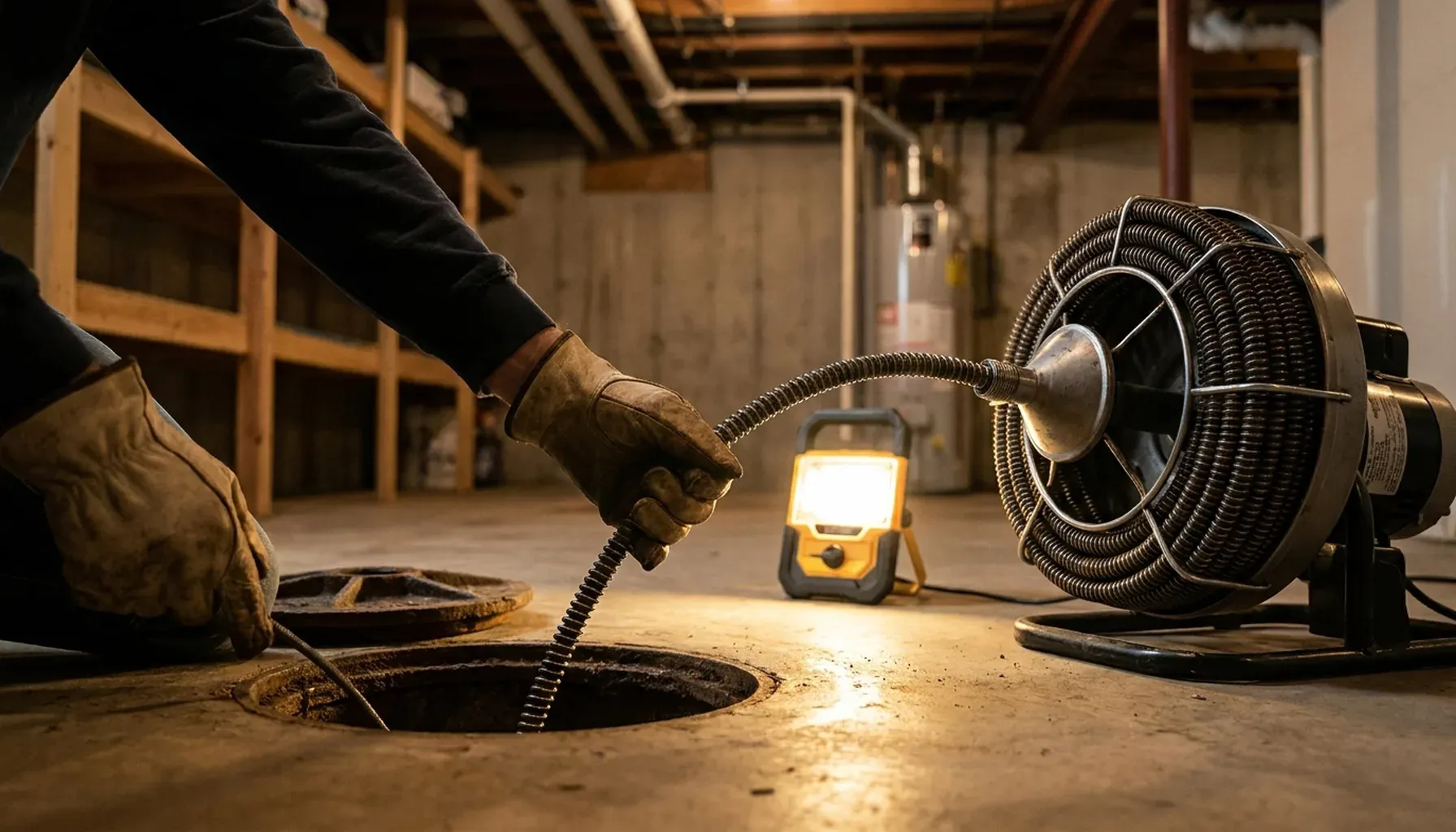
"Rodding" is Chicagoland vernacular for mechanically clearing a sewer or drain line. A motorized machine drives a rotating steel cable — the rod — through the pipe, and a cutting head on the end shears through tree roots, grease, and debris to restore full flow. In other parts of the country the same job goes by snaking, augering, or main line cleaning. It is the standard fix when the main line carrying waste from your whole house to the city sewer gets blocked.
That is different from clearing one slow sink. When the main line clogs, everything downstream is affected: multiple drains gurgle, water rises in the tub when you flush, and wastewater can push up through the lowest drain in the house.
What sewer rodding costs in 2026
Cost guides converge on a fairly consistent range for a standard residential main-line clearing:
- Chicago-area rodding: Home-services marketplace Homeyou lists standard residential main-line sewer rodding in the Chicago area at roughly $150 to $400 (Homeyou).
- National snaking/rodding: HomeGuide puts snaking a main line — also called rodding or augering — at about $100 to $250 (HomeGuide).
- National average to clear a main line: HomeAdvisor reports a national average of around $475, with most homeowners paying between $350 and $650 (HomeAdvisor).
- Chicago main-line clog repair: Angi's Chicago data puts the average cost to clear a main sewer line clog at about $482, with a typical range of $251 to $743 (Angi).
Put together, a routine residential rodding in the Chicago and Lake County market most often lands somewhere in the low-to-mid hundreds of dollars, with the average clog clearing closer to $475–$482 and simpler jobs coming in lower. Wide ranges exist because no two sewer lines — or blockages — are the same.
Rodding vs. hydro-jetting: why the price differs
Rodding and hydro-jetting both clear a line, but they are different tools at different price points. Rodding cuts a path through the blockage with a steel cable and is usually the faster, cheaper way to get a backed-up line flowing again. Hydro-jetting uses a high-pressure water jet to scour the entire interior of the pipe, removing grease and scale a cable leaves behind — and it generally costs more. Angi and HomeGuide both put a professional hydro-jetting visit around $350 to $600, with severe or stubborn clogs running higher, into the $600 to $1,400 range (Angi hydro jetting, HomeGuide hydro jetting).
For a line that clogs over and over, the smart sequence is often to rod it open now and jet it clean to buy more time before the next backup.
What makes a rodding job cost more
If your quote is above the typical range, one of these is usually why:
- No accessible cleanout. If there is no easy access point, the plumber may have to pull a toilet or reach the line another way, which adds labor. Labor is a real driver here — plumbers commonly bill $45 to $200 per hour, so anything that adds time adds cost (HomeGuide).
- Heavy tree-root intrusion. Mature trees in older Waukegan and Lake County neighborhoods send roots into clay and cast iron sewer laterals. Cutting them back can take multiple passes.
- Line length and severity. A long run or a fully solid blockage takes longer to clear.
- After-hours or emergency service. A 2 a.m. sewage backup will cost more than a scheduled daytime visit.
- The pipe is damaged, not just clogged. If rodding reveals a collapsed, bellied, or offset pipe, you are no longer paying for a cleaning — you are looking at a repair, which is a different (and larger) number.
When to pay for a camera inspection
A basic rodding call clears the blockage. A sewer camera inspection — often a separate charge — shows why it clogged. If your line backs up repeatedly, that inspection is usually money well spent: it reveals whether you are dealing with recurring roots (manageable with periodic rodding) or a structural failure that rodding will never permanently fix. Knowing the difference keeps you from paying for the same rodding call three times a year when the real problem is a broken pipe.
Why older Waukegan and Lake County homes clog
Many homes across Waukegan, Gurnee, North Chicago, Beach Park, Zion, and Park City still run their original clay or cast iron sewer laterals. Those aging pipes are exactly the setup that invites the two most common causes of main-line backups: tree roots working in through cracked joints, and decades of grease and mineral scale narrowing the pipe. That is why rodding is such a common call in this area — and why homes with a history of backups often benefit from rodding the line on a preventive schedule instead of waiting for the next emergency.
What we charge
At Waukegan Plumber Pros, sewer rodding typically starts at $149, and a licensed, insured local plumber gives you an upfront estimate before any work begins — after we look at your line, not before. If a camera shows the pipe itself is the problem, we will walk you through repair options rather than sell you another rodding that won't hold.
Backing up right now? Call (847) 750-4509 for same-day sewer rodding anywhere in Waukegan and Lake County.
Sources
- Homeyou — Sewer Rodding in Chicago, IL Costs
- HomeGuide — Main Sewer Line Cleaning Cost
- HomeAdvisor — Main Sewer Line Clog Repair Cost
- Angi — Main Sewer Line Clog Repair Cost, Chicago, IL
- Angi — Hydro Jetting Cost
- HomeGuide — Hydro Jetting Cost
Need a plumber?
Frequently Asked Questions
What is sewer rodding?
Sewer rodding is the Chicago-area term for mechanically clearing a sewer or drain line with a motorized machine that drives a rotating steel cable — the "rod" — through the pipe. A cutting head on the end of the cable shears through tree roots, grease, and debris to reopen a blocked line. Elsewhere in the country the same service is often called snaking, augering, or main line cleaning.
How much does sewer rodding cost in Illinois?
Standard residential main-line rodding generally falls in the $150 to $400 range, according to Chicago-area and national cost guides, though prices vary with cleanout access, line length, and how severe the blockage is. HomeGuide puts main-line snaking or rodding at roughly $100 to $250, while HomeAdvisor reports a national average of about $475 for clearing a main sewer line. Your actual price is only known after a plumber assesses your specific line.
Is rodding cheaper than hydro-jetting?
Usually, yes. Rodding drives a cable through the pipe to cut through roots and punch open a blockage, and it is typically the faster, lower-cost way to get a backed-up line flowing again. Hydro-jetting uses high-pressure water to scour the full interior of the pipe and generally costs more — commonly $350 to $600 for a professional visit, and higher for severe or stubborn buildup. For a line that clogs repeatedly, a plumber may rod it to open it now and recommend jetting for a deeper clean.
Why is my sewer rodding quote higher than the average?
Several factors push a rodding job above the typical range: no accessible cleanout (so the plumber has to pull a toilet or access the line another way), a very long line, heavy tree-root intrusion that needs multiple passes, after-hours or emergency service, and older clay or cast iron pipe that clogs repeatedly. If the line turns out to be damaged rather than just blocked, a camera inspection and possible repair change the picture entirely.
Does a sewer rodding cost include a camera inspection?
Not always. A basic rodding call clears the blockage; a sewer camera inspection is often a separate line item. If your line backs up repeatedly, paying for a camera inspection is usually worth it, because it shows whether the pipe itself is cracked, collapsed, or root-infested — which determines whether you need repeat rodding or an actual repair.